- Insiders Edge Newsletter
- Posts
- AI Agents Go Autonomous, and Biotech Gets a Turbo Boost
AI Agents Go Autonomous, and Biotech Gets a Turbo Boost
From fully autonomous coding bots to AI-designed antibodies: these are the breakthroughs making AI boardroom discussions a necessity this week.

Andres Franco
December 04, 2025
📊 Top Stories
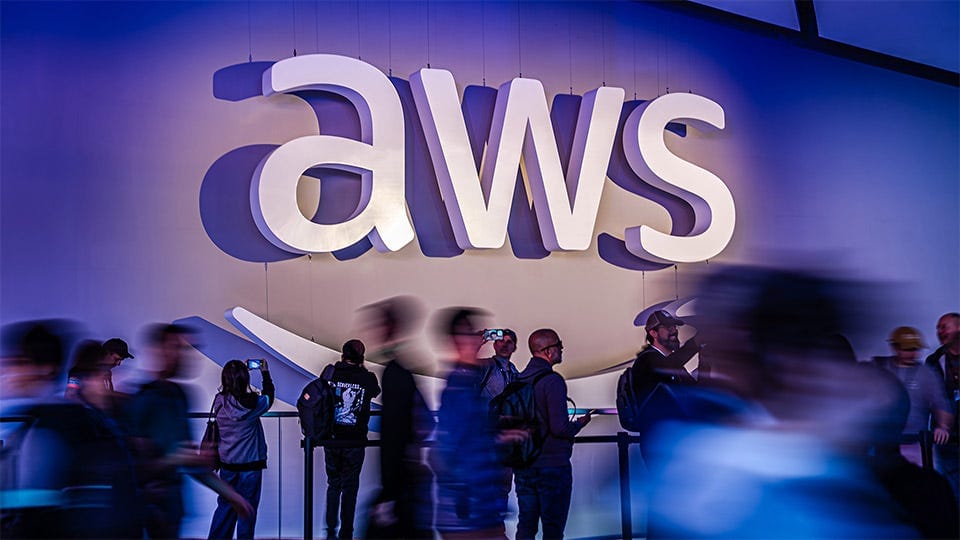
Amazon Web Services (AWS) rolls out “frontier” autonomous agents + Nova-based model stack at re:Invent 2025
NVIDIA claims a ten-fold inference speed boost for new generation AI servers; major for large-scale deployment
AWS pushes “real-world utility over benchmarks,” signaling a shift in enterprise AI strategy toward customization & practical value
Excelsior Sciences raises $95 M to accelerate small-molecule drug development using AI; a sign of new capital pouring into health-AI
New academic proof that generative-AI can build fully functional antibodies from scratch; potentially transforming drug discovery pipelines
MAIN STORIES
AWS makes AI agents first-class citizens for software dev
AWS unveils frontier agents including “Kiro”, capable of sustained autonomous coding and dev/ops tasks across days. About Amazon+2The Tech Buzz+2
Enhanced governance features in AgentCore: Natural-language policy controls plus agent memory & evaluation systems, addressing enterprise compliance and safety needs. TechCrunch+1
Amazon Nova Act now GA: Nova-based agents that automate real-world UI workflows (e.g. QA testing, checkout flows, data entry) at high reliability, a leap for internal automation use-cases. Amazon Web Services, Inc.+1
This marks a clear push by AWS to tilt enterprise AI away from prototype-level assistance toward full agentic automation. TechCrunch+2About Amazon+2
Source: The AI Economy
NVIDIA’s new AI server boosts inference speeds 10×, game-changer for LLM deployment
NVIDIA announces new server packing 72 high-end chips with fast interconnects, delivering up to 10× faster inference for mixture-of-expert (MoE) models, compared to prior-generation servers. Reuters+1
The performance boost applies to high-profile models like Moonshoot AI’s Kimi K2 Thinking and DeepSeek’s recent architectures, signaling that infrastructure remains a competitive moat even as open models proliferate. Reuters+1
With deployment now becoming the major bottleneck for model adoption, this hardware leap could accelerate large-scale real-time AI services across cloud providers.

NVIDIA Newsroom
AWS publicly shifts narrative: “Benchmarks don’t matter,” real value does
AWS argues against leaderboard-driven AI model competition, focusing instead on practical, domain-specific performance and enterprise real-world utility. The Verge
As part of that, AWS launched Nova Forge, a customization platform letting companies inject their own data for tailored models, useful for specialized applications like industry-specific chatbots, compliance, or internal workflows. Axios+1
This shift reflects broader enterprise sentiment: bespoke, controllable, data-sovereign AI may out-compete “one-size-fits-all” foundation models in real business use.

Source: VentureBeat
Massive funding lands in AI-driven drug discovery: Excelsior Sciences raises $95 M
Excelsior Sciences raised $95 M in Series A + grant funding to scale up an AI-powered small-molecule drug development platform, aiming to compress what traditionally takes months or years into weeks. Reuters
Their “smart bloccs” approach promises to streamline candidate generation and optimization, potentially reducing early-stage drug development timelines significantly. Reuters
Given that small-molecule therapeutics still account for ~60 % of newly approved drugs, this signals a major inflection point for AI in pharma, especially for startups or “speed-to-clinic” biotech plays.

Source: Fierce Pharma
Generative-AI now builds full antibodies from scratch not just fragments
Scientists at Institute for Protein Design (Baker Lab) published a study demonstrating that AI can design full-length, functional antibodies (heavy + light chains) de novo, no animal immunization required. Protein Design Institute+1
This marks a major advance beyond prior “nanobody fragments only” results, potentially enabling rapid generation of therapeutic-grade antibodies for diseases currently considered undruggable. Protein Design Institute+1
The breakthrough is being framed as a potential paradigm shift for the ~$200 B antibody-drug industry, with vast implications for oncology, immunology, and infectious disease therapeutics. Protein Design Institute+1

Institute for Protein Design
AI RESEARCH PAPERS
Z-Image: An Efficient Image Generation Foundation Model with Single-Stream Diffusion Transformer — introduces a diffusion-based image-generation model that streamlines complexity. Real-world implication: improved image generation pipelines for creative agencies or media firms needing high throughput content with lower compute costs. Hugging Face
ToolOrchestra: Elevating Intelligence via Efficient Model and Tool Orchestration — a framework for orchestrating multiple AI models + external tools, enabling more complex, tool-augmented workflows. Useful for companies building multi-step pipelines (e.g. automated report generation, data ingestion → analysis → output). Hugging Face
DeepSeek‑V3.2: Pushing the Frontier of Open Large Language Models — newest version of an open-source LLM that appears in weekly trending list. Implication: greater open-source viability for businesses needing powerful language models without vendor lock-in. Hugging Face
LEGAL & REGULATORY
Digital Omnibus package proposes sweeping changes to EU AI and data laws — The package, published 19 Nov 2025, aims to simplify key regulations including the General Data Protection Regulation (GDPR), the EU AI Act and related directives (ePrivacy, NIS2, Data Act), by reducing administrative burden, harmonizing definitions, and easing compliance for SMEs. Morrison Foerster+2European Commission+2
High-risk AI compliance postponed, and personal data rules loosened — Under the Omnibus proposals, obligations for high-risk AI systems would be delayed until new standards and support tools are available (effectively pushing out earlier deadlines). At the same time, the changes would widen the acceptable legal basis for processing personal data, including for AI training, potentially allowing use of pseudonymized sensitive data under a “legitimate interest” framework rather than strict consent. Morrison Foerster+
BIO-HACKING / HEALTH-TECH BREAKTHROUGHS
New consensus study underway in U.S. to assess AI-biosecurity risks — The National Academies of Sciences, Engineering, and Medicine (NASEM) has launched a study (mandated by executive order) to analyze how AI applied to biology, especially generative AI trained on biological data, could impact biosecurity, including risks from synthetic pathogens, and recommend mitigations. National Academies+1
Growing evidence: AI-driven biodesign tools lower barrier to biological weapons creation — A 2025 report titled Contemporary AI foundation models increase biological weapons risk argues that modern large-language models can guide users through complex bioweapon design steps (for example reconstructing viruses from synthetic DNA), contradicting earlier assumptions that tacit, hands-on expertise is necessary. This highlights dual-use dangers as AI-powered biotech becomes more accessible. arXiv+1
MARKET GAPS & OPPORTUNITIES
Enterprises needing custom, domain-specific LLMs — especially in regulated industries (finance, healthcare, legal) — may prefer infrastructure-first providers (e.g., AWS Nova Forge) over “general-purpose” foundation models.
SMBs and mid-market firms have an opening to adopt autonomous agents (for coding, DevOps, UI automation) now that big-cloud vendors support them, a greenfield for small-team automation.
Biotech and pharma: early-stage companies or startups could leverage AI-driven antibody/small-molecule design platforms to fast-track therapy discovery, especially for rare diseases or niche targets.
AI-powered drug-discovery services (small-molecule or biologics) aimed at licensing by larger pharmas, an under-served niche, especially for “undruggable” targets.
Compliance, governance, and audit tooling for enterprise AI — as agents become mainstream, demand grows for oversight, documentation, explainability, and data-sovereignty compliance tools.
Cloud-agnostic inference / hosting infrastructure services — given hardware race (NVIDIA vs AMD vs others), there may be demand for specialized hosting providers that guarantee performance for MoE or large-scale model deployment.
Cool Tools For This Week From insidersedge.io
Glarity - Get ChatGPT summaries in Google & YouTube
Fontis.ai - AI art platform for generating and printing high-quality artwork
MajorGen - Craft job-ready resumes in seconds
WOXO - Generate videos from short descriptions
Jobs To Check Out This Week On insidersedge.io
Senior ML Engineer - Aave Companies
EMEA Head AI Fintech - Prospexis.io
Senior Technical Lead - ChainGPT
Marketing Manager - AI Arena
Thanks for tuning into today’s edition!
Be brutally honest. DM me or email me back with any suggestions!