- Insiders Edge Newsletter
- Posts
- Open‐source AI Leaps Ahead; and Regulators Scramble
Open‐source AI Leaps Ahead; and Regulators Scramble
Why new reasoning models from China and lightweight small‐model breakthroughs are shifting power; and what new rules mean for U.S. businesses

Andres Franco
December 02, 2025
📊 Top Stories
DeepSeek releases V3.2 / Speciale models rivaling GPT‑5 and Gemini 3 Pro
NVIDIA drops Orchestrator-8B: A lean orchestration model outperforming bigger LLMs on agentic tasks
VibeThinker-1.5B challenges scaling orthodoxy with 1.5B‑parameter reasoning strength
Australian Government unveils new National AI Plan emphasizing growth over regulation for now
U.S. states, including California and Illinois, tighten regulations around AI-driven hiring and workplace tools
MAIN STORIES
DeepSeek releases V3.2 / Speciale — open‑source models challenging GPT‑5 and Gemini 3 Pro
Open-source release: DeepSeek has published two new reasoning-heavy models, V3.2 and V3.2‑Speciale, under an open licence. The move significantly lowers the barrier to cutting-edge AI capabilities. Bloomberg+2Analytics India Magazine+2
Benchmark performance: According to DeepSeek, V3.2‑Speciale delivers reasoning and agentic performance comparable to top-tier models like GPT‑5 and Gemini 3 Pro, narrowing the gap between closed and open‑source AI. marketingtrending.asoworld.com+1
Strategic implication: For startups, governments, and non‑Western firms, open‑source alternatives now offer near‑frontier capability potentially reshaping how AI platforms are chosen, deployed, or regulated.
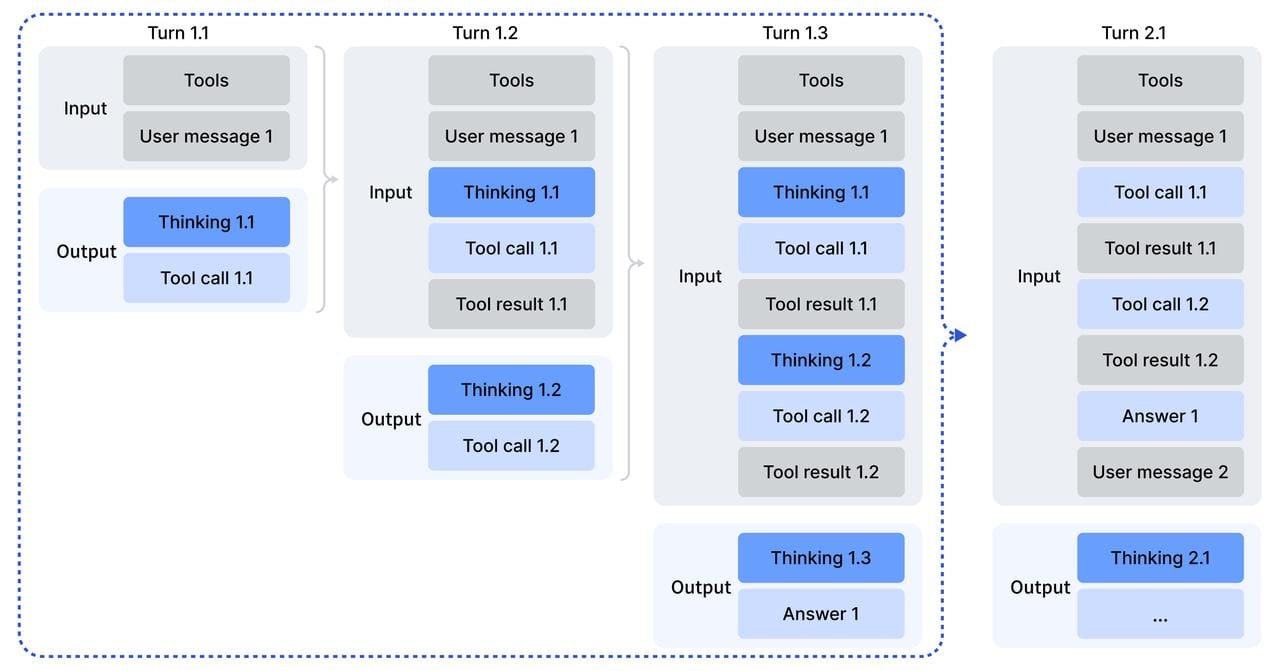
Source: DeepSeek API
NVIDIA’s Orchestrator‑8B proves efficiency can beat brute scale
New orchestration paradigm: Orchestrator‑8B, a relatively small (8B-parameter) model is designed to orchestrate tool‑use and model‑selection rather than relying on a single massive LLM for all tasks. MarkTechPost+1
Strong performance, lower cost: On the “Humanity’s Last Exam” benchmark, Orchestrator‑8B scored 37.1%, beating much larger models while using about 2.5× less compute. LinkedIn+1
What this enables: This model structure paves the way for cost‑efficient, modular, agentic AI ideal for enterprises wanting to integrate AI agents economically without overspending on compute.

Source: Mark Tech Post
VibeThinker‑1.5B — small model, big logic
Breaking scaling norms: VibeThinker-1.5B, a dense 1.5B‑parameter model, achieves reasoning performance on par with larger open models challenging the assumption that “bigger is always better.” Hugging Face+2novalogiq.com+2
Cost-effective: The entire training cost was about $7,800 orders-of-magnitude lower than models with hundreds of billions of parameters. goatstack.ai+1
Use case potential: For organizations with limited infrastructure think NGOs, small startups, academic labs this opens the door to in-house AI reasoning without massive cloud budgets.

Source: Hugging Face
Australia unveils National AI Plan prioritizing growth over strict regulation
Policy shift: The Australian Government published a National AI Plan that encourages widespread AI adoption across the economy but delays aggressive regulation. A dedicated AI‑Safety Institute is planned for 2026. Reuters+1
Business signal: This signals a favorable environment for companies in AI deployment, especially in infrastructure, cloud, healthcare, and public services with fewer near-term regulatory hurdles.

Source: Reuters
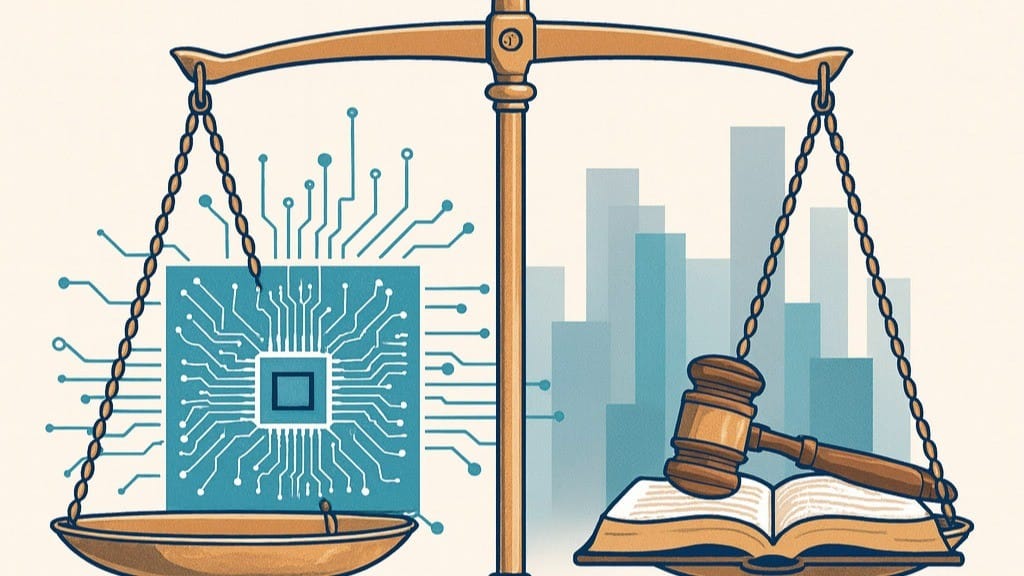
U.S. states tighten rules on AI hiring tools; regulatory heat on employment‑related AI
New civil‑rights rules: States including California, Illinois, and New York are passing legislation to curb AI-driven bias in hiring, requiring transparency, auditability, and non‑discrimination safeguards. The Washington Post
Business risk: Companies using algorithmic hiring or performance‑monitoring tools now face legal and reputational risks if they don’t document compliance and fairness.
Source: LinkedIn
AI RESEARCH PAPERS
VibeThinker-1.5B — proves remarkably strong reasoning with only 1.5 B parameters, often beating larger open models and offering a low‑cost path to logic‑heavy AI tasks. Hugging Face+1
Implication: Organizations with modest compute can deploy LLMs for math, code, or decision‑support without requiring hyperscale infrastructure.Orchestrator-8B (from NVIDIA via ToolOrchestra) — shows that small controller models can coordinate tools and larger models efficiently and cheaply, outperforming big monolithic LLMs on certain benchmarks. MarkTechPost+1
Implication: This architecture could become a blueprint for enterprise AI, combining cost control, tool‑use flexibility, and modular deployment.DeepSeek Math V2 — an open‑weight model focused on mathematical theorem‑proving and self‑verification, achieving gold‑level performance in global math competitions. Analytics India Magazine+2MarkTechPost+2
Implication: Academic, scientific, and fintech firms could use this model to automate complex quantitative analysis, formal verification, or advanced modeling without relying on proprietary systems.
LEGAL & REGULATORY
Texas Responsible AI Governance Act (TRAIGA) — taking effect January 1, 2026; limits usage of AI systems in Texas for certain sensitive applications (e.g., behavioral manipulation, deepfakes, unlawful discrimination) and restricts wholesale private‑sector AI regulation obligations to mainly governmental use. JD Supra
EU regulatory delay — The EU Artificial Intelligence Act has deferred enforcement of key “high-risk” provisions until December 2027, meaning firms deploying biometric, health, credit‑scoring, or law‑enforcement‑facing AI systems have a longer runway before full compliance is required. Reuters
BIO‑HACKING / HEALTH‑TECH BREAKTHROUGHS
BlueSeal Horizon 3.0T MRI — helium-free, AI-enabled
Faster scans: up to 3× quicker with 80% sharper images.
Access potential: could improve diagnostic imaging in rural or mobile clinics.
Universal Practice AI physiotherapy platform
Remote therapy: uses built-in camera, no wearables.
Effective: 31–48% pain reduction in pilot trials.
AI drug-safety & RWE tools (Libra / DARWEN)
Predictive: screens for drug-induced liver injury early.
Data-driven insights: generates regulatory-grade real-world evidence from messy clinical data.
MARKET GAPS & OPPORTUNITIES
Open‑source AI consulting & deployment services — As models like DeepSeek V3.2 and VibeThinker‑1.5B become viable, an opportunity arises for firms that help other businesses integrate, fine‑tune, and maintain open‑source AI without investing in proprietary solutions.
Edge / on‑prem AI tooling for SMEs and non‑profits — Lightweight models (e.g., VibeThinker‑1.5B) make advanced AI accessible to organizations with modest infrastructure (e.g., NGOs, clinics, education institutions).
Algorithmic hiring compliance and audit services — With states tightening AI hiring laws, there's a gap for vendors that help companies audit, document, and verify fairness and compliance of their AI-driven HR tools.
AI‑powered math, modeling, and analytics tools for finance, engineering, biotech — Open‑source theorem‑proving models like DeepSeek Math V2 could underpin tools for quantitative analysis, simulation, and formal verification, especially by firms unwilling to trust closed‑source corporate models.
Cool tools of the week from insidersedge.io
Wordmax - AI writer for blog writers with templates and fonts
Open Assistant - A conversational AI to improve your world
Abbot - Programmable smart assistant for customer success teams
Sturppy - Financial assistant tool for small businesses
Jobs To Check Out This Week On insidersedge.io
Senior ML Engineer - Aave Companies
Artist Acquisition Representative - Audius
Community Manager - Origin Protocol
Senior AI ML Engineer - Kraken Digital Asset Exchange
Thanks for tuning into today’s edition!
Be brutally honest. DM me or email me back with any suggestions!